


Why Peg Selection Decides Whether Your Precast Mould Survives the Pour
In a precast plant, a steel formwork peg is not a consumable—it is the component that transfers lateral concrete pressure from the panel face into the mould base and locking system. Get the peg wrong and you will see it in the first 20 pours: panel drift of 2–3 mm, grout loss at the joint, and eventually a blowout that costs a full shift. This guide gives you the seven criteria we check on the workshop floor before a peg set leaves for a precast customer, with the numbers behind each one.
1. Peg Diameter and Shear Area: The Arithmetic Behind the Size
Peg diameter is set by the shear force at the panel-to-base joint, not by habit. For a standard precast panel mould pouring at 1.5 m/hr with fresh concrete density of 2,400 kg/m³, lateral pressure at the base can reach 36 kPa. On a 1.2 m wide panel, that is 43 kN per linear metre of joint. A 20 mm Q235 peg has a shear area of 314 mm²; at a allowable shear stress of 80 MPa for Q235 in this application, one peg carries about 25 kN. That means you need at least two pegs per metre, spaced no more than 500 mm centres. Drop to 16 mm pegs and the shear area falls to 201 mm²—you must tighten spacing to 300 mm, which slows stripping and raises labour cost. Our rule: 20 mm pegs for panels up to 2.4 m high, 24 mm above that.
2. Steel Grade and Weldability: Why Q235 Beats Mystery Alloy
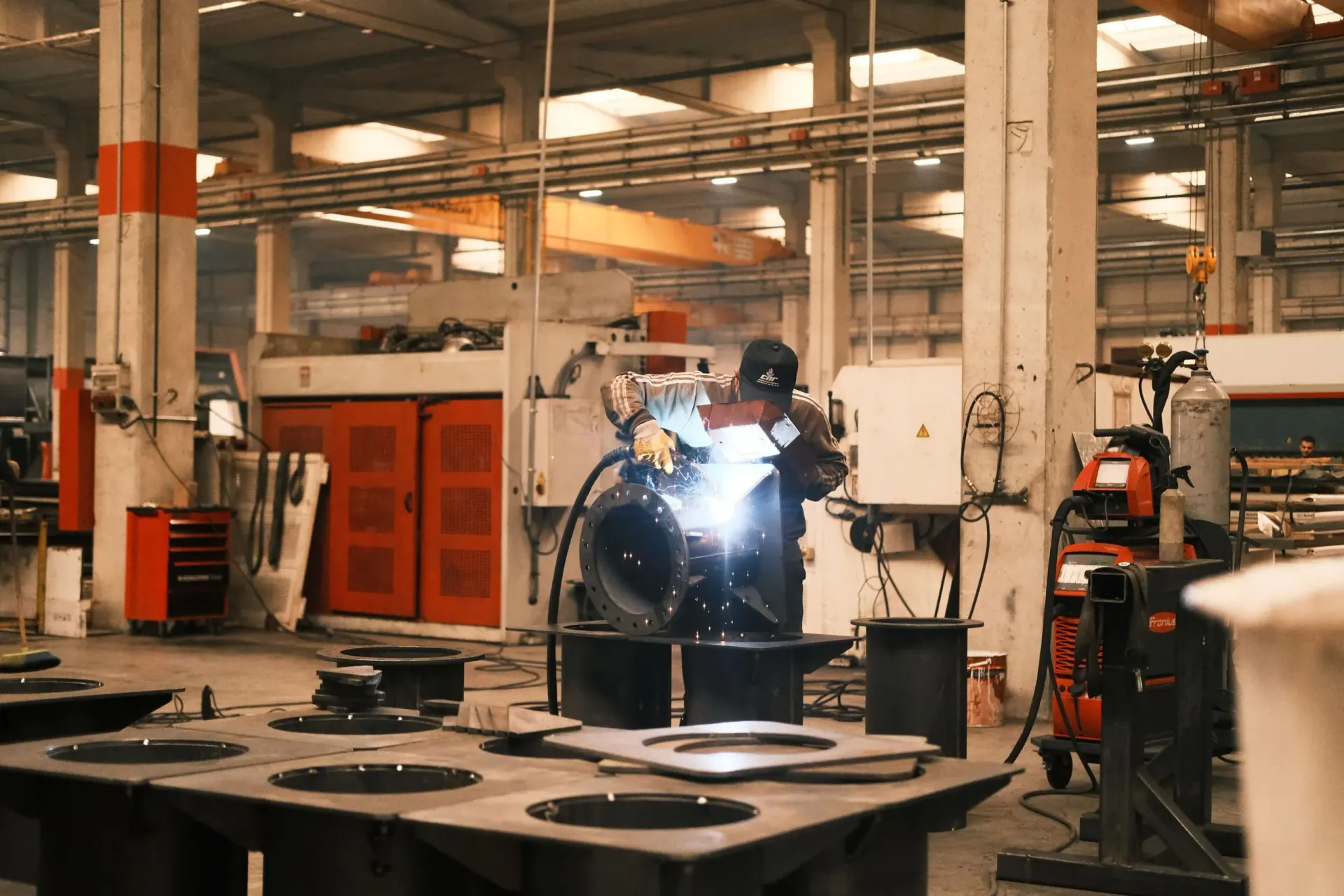
Every peg we ship is machined from Q235 carbon steel—not because it is cheap, but because it welds predictably to the Q235 ribs and stiffeners on our panels. A peg in an unknown alloy may show higher yield strength on paper, but it can crack at the weld toe after 30–40 thermal cycles. We TIG-weld pegs into the panel rib with a 3 mm fillet, then check 5% of each batch with a 10 kN pull test. If you are buying pegs to retrofit onto existing moulds, ask for the mill certificate (MTC) and confirm the carbon equivalent is below 0.40; above that, preheat is required and field welding becomes unreliable.
3. Tolerance and Fit: Why ±0.5 mm Matters More Than You Think
A peg that is 0.8 mm oversize will not enter a reamed hole without a hammer; one that is 0.8 mm undersize lets the panel shift under vibration. We hold peg diameter and hole position to ±0.5 mm. In practice, that means a 20 mm peg fits a 20.2 mm hole with a sliding fit and no play. If your current moulds have worn holes—common after 60–80 reuses—do not buy oversized pegs to compensate. Ream the hole and fit a 0.5 mm wall bushing instead; it costs less than a blowout and keeps the peg standard.
4. Coating and Corrosion: When to Pay for It and When Not To
Bare Q235 pegs will flash-rust within 3–5 days in a humid precast yard. For indoor plants with 60% RH or less, a light oil film is enough and coating adds cost with no benefit. For outdoor stockyards or coastal sites, specify hot-dip galvanizing at 50–70 µm or a zinc-flake coating. Do not use paint on the peg shank—it changes the fit by 0.05–0.10 mm and wears into the hole, accelerating clearance. Galvanized pegs typically add 8–12% to the peg cost but can double service life in wet conditions.
5. Peg Length and Embedment: The 1.5× Rule
Embedment depth should be at least 1.5 times the peg diameter. A 20 mm peg needs 30 mm of engagement in the base plate or rib. Shorter engagement concentrates stress at the hole edge and is the most common cause of ovalized holes we see in returned moulds. For panels with 6 mm steel faces and welded ribs, we machine the peg seat into the rib, giving 35–40 mm engagement without protruding into the concrete face. If you are using pegs as removable alignment pins rather than welded studs, add 10 mm to the length for a extraction gap.
6. Reuse Cycles and Wear: What 60–100 Reuses Does to a Peg
Standard moulds with Q235 pegs are rated for 60–100 reuses; heavy-duty designs with hardened pegs reach 120+. The wear point is not the peg body but the hole in the panel rib. After 50 pours, a 20.2 mm hole can open to 20.5 mm, introducing 0.3 mm of play. That is enough to cause 1–2 mm of panel deflection at the top of a 2 m panel. Inspect hole diameter every 20 pours with a plug gauge; when play exceeds 0.4 mm, ream and bush. Pegs themselves rarely fail before the hole does.
7. Cost per Pour: The Only Comparison That Matters
Buyers often compare peg price per piece. The real number is cost per pour. A 20 mm Q235 peg set for a 6 m mould might cost USD 120–180 (typical market range) and last 80 pours—about USD 1.50–2.25 per pour. A cheaper uncoated peg at USD 80 that ovalizes holes after 30 pours costs USD 2.67 per pour plus reaming labour. The table below compares three common peg options on the criteria above.
| Option | Diameter | Steel | Coating | Typical reuse | Best for | When NOT to choose |
|---|---|---|---|---|---|---|
| Standard welded peg | 20 mm | Q235 | Oil film | 60–100 | Indoor precast, panels ≤2.4 m | Coastal or outdoor storage |
| Galvanized peg | 20 mm | Q235 | Hot-dip 50–70 µm | 80–120 | Humid or outdoor yards | Tight-tolerance holes (coating adds 0.05–0.10 mm) |
| Heavy-duty peg | 24 mm | Q235, hardened tip | Zinc-flake | 120+ | Panels >2.4 m, high pour rates | Small moulds where 24 mm hole weakens rib |
Workshop Checks Before Your Pegs Ship
Every batch of pegs is checked against the panel it will serve. The sequence on our floor is:
- Measure peg diameter with a micrometer at three points; record against ±0.5 mm tolerance.
- Check hole position on the panel rib with a jig; any deviation over 0.5 mm sends the panel back to the drill station.
- Weld peg with 3 mm fillet; visual inspect and 5% pull test at 10 kN.
- Apply coating if specified; measure coating thickness on 3 pegs per batch.
- Pack with matching bushings if holes are pre-reamed; label batch with pour count start.
Lead time is 7–10 working days for stock peg sets and 15–25 working days for customised formwork with pegs after deposit. We ship FOB Tianjin, with CIF/CFR on request, and provide CI, PL, MTC, CO and FORM E. Payment is 30% deposit by T/T, balance against copy of B/L. There is no MOQ.
Frequently Asked Questions
Can I use standard dowel pins instead of formwork pegs?
Dowel pins are typically harder and ground to tighter tolerance, but they lack the weld shoulder that transfers load into the rib. Welding a dowel pin to Q235 can cause hydrogen cracking unless preheated. Use purpose-made pegs with a weld shoulder.
How often should pegs be replaced?
Replace pegs when the shank shows 0.2 mm of wear or when the hole play exceeds 0.4 mm. In a plant running 5 pours per week, expect to inspect every 4 weeks.
Do galvanized pegs fit the same holes?
Galvanizing adds 50–70 µm per surface, so a 20 mm peg becomes about 20.1–20.14 mm. If your hole is already at 20.2 mm, it will still fit with a sliding fit, but check before ordering a full set.