Home Products About Us Factory Quality Projects News Contact Get a Quote
PRODUCT

Box Girder Formwork

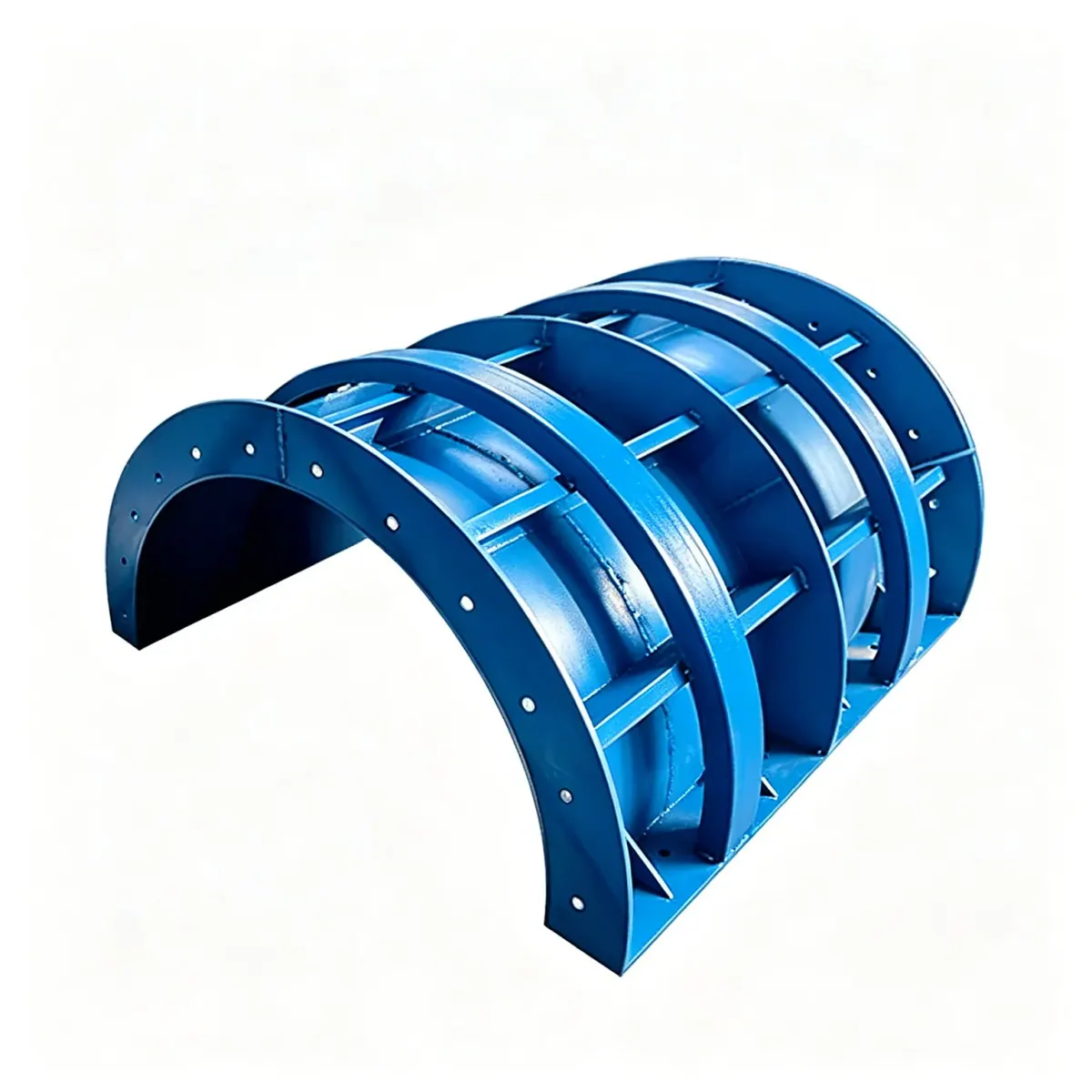
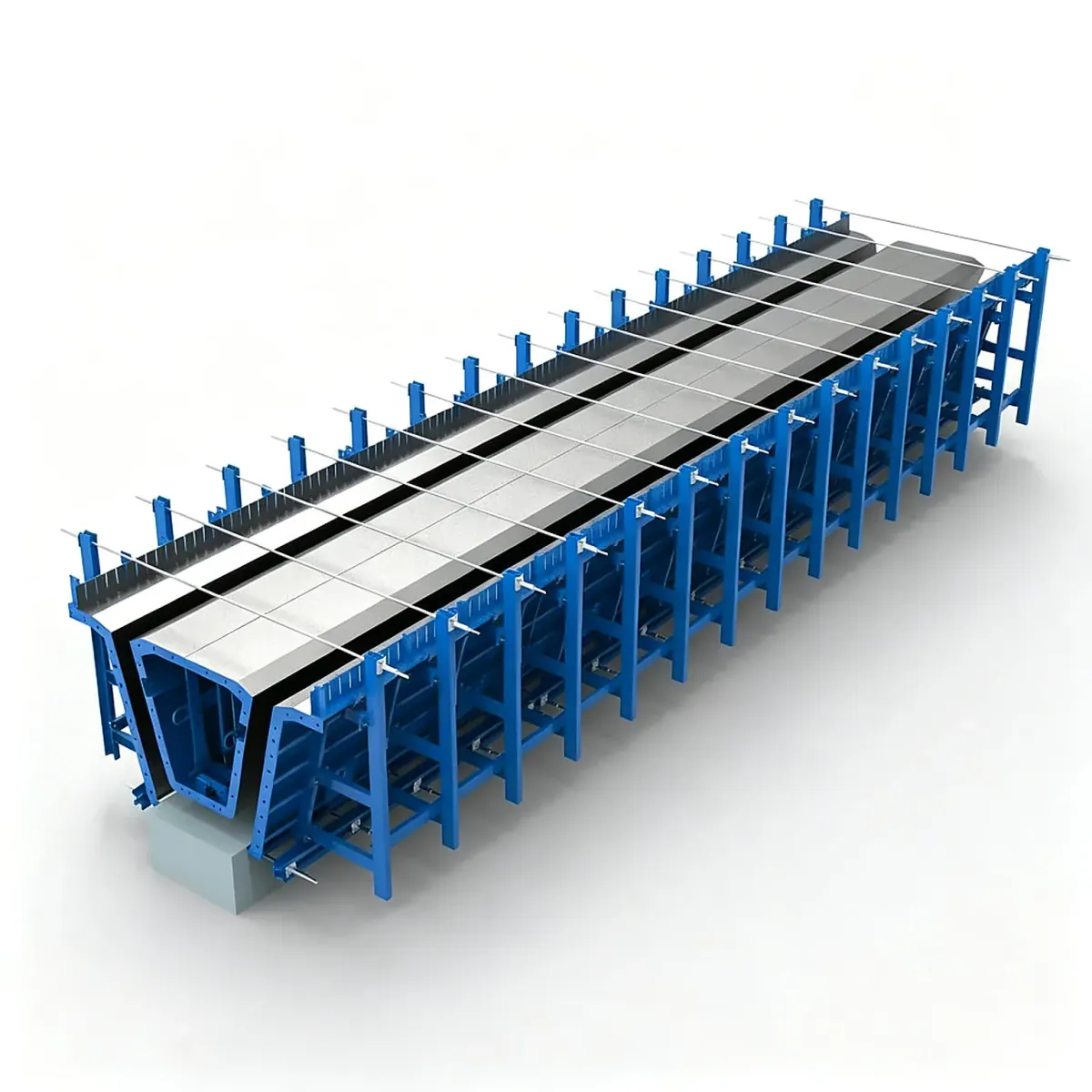
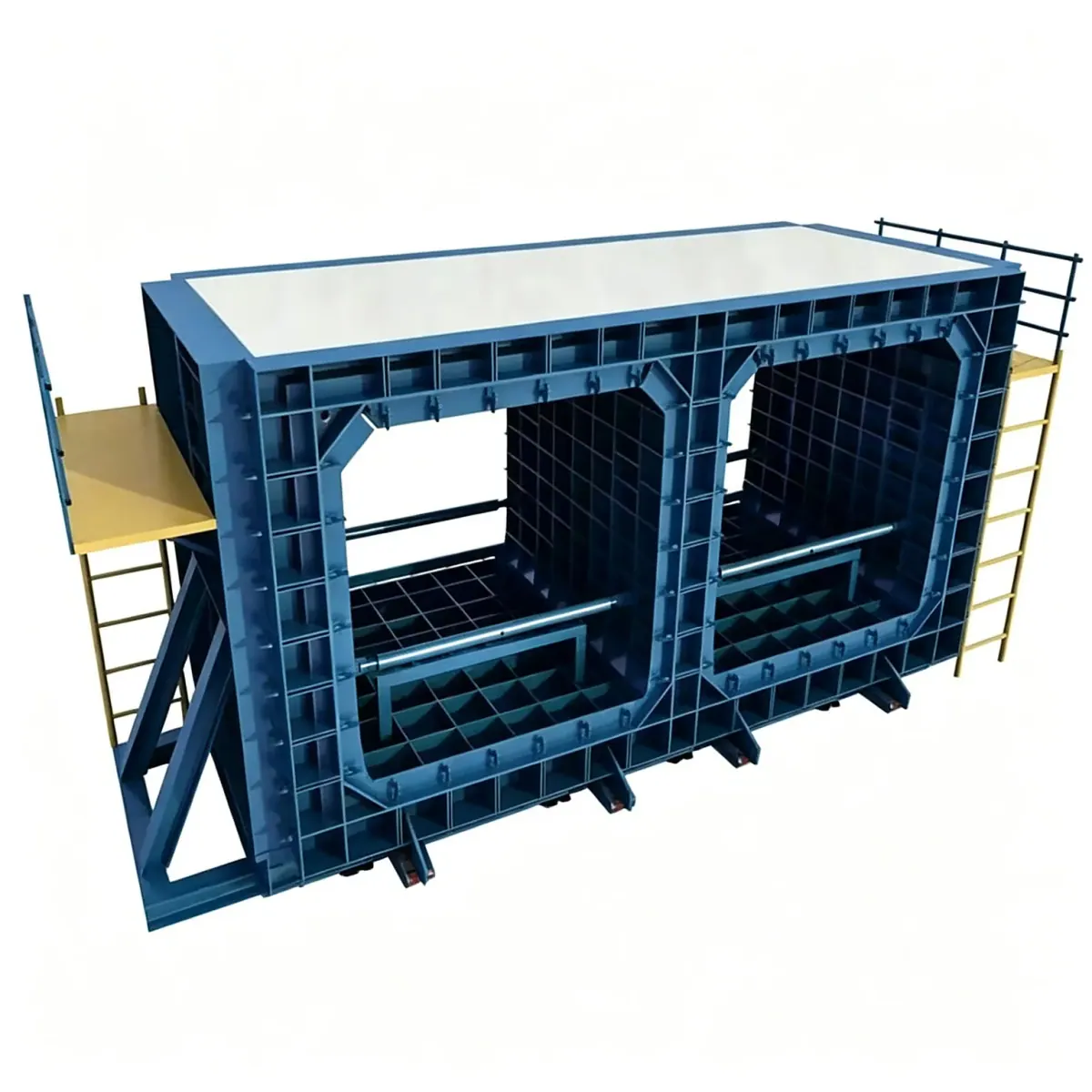
Steel formwork for precast concrete box girders used in bridge construction, with internal formwork and external stiffening frame.

3D PREVIEW Loading 3D preview…
Drag to rotate
MaterialQ235 carbon steel
Panel thickness3–6 mm (per drawing)
Surface treatmentPainted finish (colour on request)
Tolerance±0.5 mm
ApplicationHighway and railway bridge girders
SizesCustomizable — built to order
PRODUCT DESCRIPTION

About this mould

Box girders demand the tightest geometry control in precast bridge work: web plumbness, slab thickness and segment joint faces all translate directly into erection speed on site.

Zhongbian builds box girder moulds as modular systems — external stiffening frame, adjustable internal formwork and matched bolt holes — so sections close square every cycle.

Inner forms strip mechanically or hydraulically depending on the yard cycle plan, and every set is trial-assembled with a dimensional report before dispatch.
KEY FEATURES

What you get in the set

  • External stiffening frame with matched joints
  • Adjustable internal formwork
  • Machined joint faces for segment matching
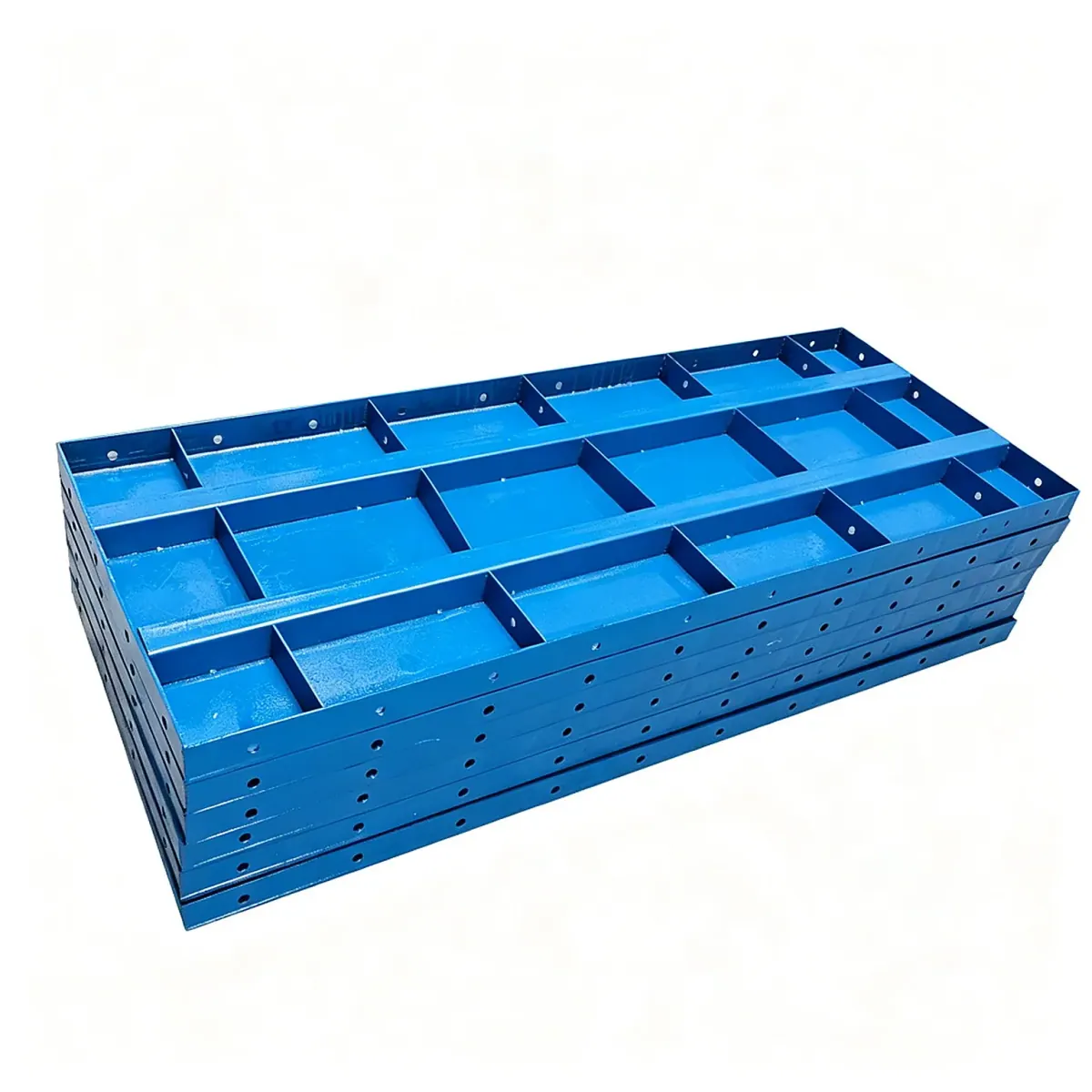
  • Q235 steel plate, 3–6 mm, welded ribs
  • Mechanical or hydraulic core stripping
  • Trial assembly with dimensional report
ADVANTAGES

Why buyers choose this mould

Internal form built as a reusable assembly

The inner form is collapsible or segmented so it can be stripped from the cell and reused for the next girder, instead of being cut out or broken up after one cast.

External frame holds the section true

An external stiffening frame carries the side and soffit panels and keeps the web and bottom geometry stable over the full casting length.

Segmental or full span, as your scheme requires

Moulds are detailed for the girder length and the segment scheme in use, including match cast joints where the unit has to fit the previous one.

Measured and photographed at trial assembly

Overall length, camber set up, web thickness and diagonals are checked and recorded before dispatch, so the first cast in your yard is not also a fitting exercise.

TYPICAL APPLICATIONS

Where it works

Box girder moulds are used in precast yards producing bridge girders for highway viaducts, railway bridges and urban expressway works, where girder geometry must repeat within tight tolerance.

Highway and rail bridges. Precast box girders for expressway and railway viaducts are produced in a casting yard and then launched or lifted into place, so each unit must match the design section exactly.

Segmental yard production. In match cast work every segment is cast against the previous one. Mould geometry, joint plates and soffit alignment have to be right before the first unit is poured.

Highway bridges Railway bridges Precast yards
COMMON QUESTIONS

Before you inquire

Full-span or segmental?
Both — tell us the girder length and segment scheme and the mould is detailed accordingly.
Can the internal form be reused?
Yes, internal forms are built as reusable assemblies sized to the cell geometry of your girder.
What is the lead time?
Bridge girder moulds typically take 15–25 days including trial assembly and measurement.
How is camber controlled?
Soffit and side panels are set to the camber stated on your drawing and the frame is measured at trial assembly. Tell us whether camber is applied in the mould or at the yard, and on the prestressing sequence, so the setting is correct.
Can one mould cast different girder depths?
Where depth changes are planned, side panels can be built with adjustable height pieces and the internal form sized to the deepest cell, so one mould covers a family of sections.
What do you need in order to quote a bridge girder mould?
The section drawing with wall thicknesses, the girder length, the segment scheme and a description of the casting yard arrangement. A marked up sketch is enough to start; we confirm the drawing before fabrication.

Back to Products